
GeoNets
Posted in GeoSynthetics
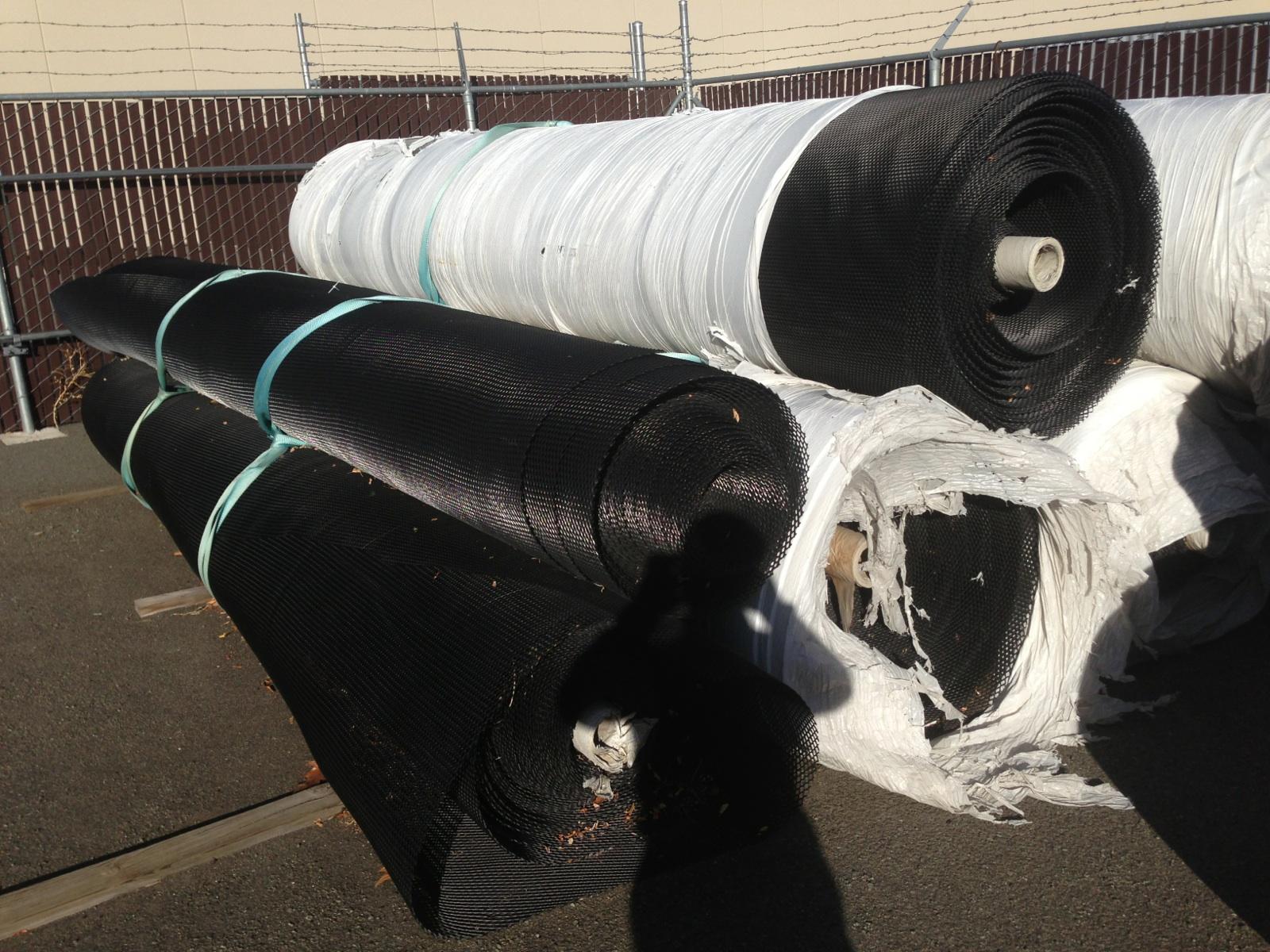
A geonet is a geosynthetic material consisting of integrally connected parallel sets of ribs overlying similar sets at various angles for in-plane drainage of liquids or gases. Geonets are often laminated with geotextiles on one or both surfaces and are then referred to as drainage geocomposites. They are competitive with other drainage geocomposites having different core configurations.
Geonets are formed by a continuous extrusion process into a netlike configuration of parallel sets of interconnected ribs. There are three categories of geonets:
Biplanar geonets: These are the original and most common types and consist of two sets of intersecting ribs at different angles and spacings. The ribs themselves are of different sizes and shapes for different styles.
Triplanar geonets: These have parallel central ribs with smaller sets of ribs above and beneath mainly for geometric stability.
Other geonets: These newer geonet structures have either box shaped channels or protruding columns from an underlying support network.
Each of the above categories may have variations within themselves (mainly thickness).
Geonets are supplied in rolls and should be placed and covered in a timely manner. While UV and heat effects are not as severe in geonets as they are in geotextile (because of thicker ribs in contrast to thin yarns and fibers), it is good practice not to leave the material exposed and subjected to accidental damage or contamination of any variety. Contamination can occur from soil, miscellaneous sediment, construction debris, ingrowing vegetation, and so on.
Image Gallery